


Frequently Asked Questions
Difference between nylon and taklon?
Nylon offers more structure and spring-back for firmer control with dense products. Taklon is softer, better for blending lighter textures.
Suitable for brow lamination?
Yes, springy nylon holds shape with lamination adhesives and setting solutions.
How does LB05 compare to T2?
T2 offers excellent value for general brow work. LB05 provides premium nylon for dense professional products requiring maximum precision.
Can this be autoclaved?
Recommend alcohol/peroxide disinfection. Autoclaving can damage wood handle and adhesive integrity.
What wood are CTR brush handles made from?
CTR brush handles are crafted from premium hardwoods — primarily select African ash and Canadian alder — that undergo a 20-year aging and stabilization process. This extended aging removes all residual moisture from the wood, making it completely immune to humidity, warping, and shrinkage even under daily salon conditions.
After stabilization, each handle is treated in pressure chambers with protective salts and resins, then finished with three layers of adhesion primer and a UV-polymerized lacquer that resists alcohol, acetone, and surfactants. The result is a handle that won't crack, peel, or swell from repeated washing or disinfectants.
The ergonomic weight balance — deliberately shifted toward the bronze ferrule — reduces hand fatigue during multi-hour sessions. Paired with Japanese-grade bronze ferrules and our Triple-Lock bristle system, CTR handles are engineered to last 8–10 years of professional daily use.
Does the bristle shed?
No. CTR professional brushes do not shed during active makeup application or regular cleaning. Bristle retention is one of our defining quality standards, achieved through the Triple-Lock System:
1. Polymer cascade adhesive — The base of every bristle bundle is immersed in a high-tech elastic adhesive that bonds each individual hair permanently without hardening over time.
2. Silicone cushion layer — A thin silicone layer over the adhesive absorbs pressure and prevents bristle breakage at the base during heavy use.
3. Japanese bronze ferrule crimp — The entire assembly is placed inside a stamped bronze ferrule and mechanically crimped with jeweler's precision. Bronze neither expands from heat nor contracts from cold.
Important: Like a new cashmere sweater, any new natural-bristle brush may release 2–5 hairs during the first 1–2 uses. These are "technological excess" — short hairs that didn't reach the adhesive base during hand-assembly. After the first proper wash, this stops permanently.
Are CTR bristles hand-assembled or machine-cut?
All CTR professional brushes are exclusively hand-assembled. We never use machine-cutting to shape bristle bundles — a practice that destroys the professional performance of any brush.
The difference is fundamental:
Machine-cut bristle (mass-market): Hairs are packed into the ferrule and mechanically trimmed to shape. This cuts off the finest, softest tip of each hair — the natural "peak." The result: stiff, scratchy stumps that irritate skin, damage the epidermis, and deposit makeup in blotches.
CTR hand-assembled bristle (luxury standard): Artisans select hairs individually and lay them into precision molds hair by hair, preserving the untouched natural tip of every single fiber. The natural tip of CTR's squirrel or goat hair is dozens of times finer than a human hair. These preserved tips give CTR brushes their legendary cashmere softness and their ability to blend makeup into a flawless, seamless finish.
How should I care for my CTR brushes?
CTR high-end brush care falls into two categories: express cleaning between clients and deep washing.
Express cleaning (daily):
• For natural bristle (squirrel, goat): Use alcohol-free or low-alcohol brush wipes. Gently swipe the bristle across a textured cloth; dry time is 2–3 minutes.
• For synthetic bristle (taklon, nylon): Alcohol-based express cleaners are safe and effective.
• Critical rule: Never use medical-grade alcohol antiseptic on natural bristle — it instantly dries out the hair cuticle, making it brittle and stiff.
Deep washing (every 1–2 weeks):
• Natural bristle: Use gentle bar soap, professional brush shampoo, or sulfate-free shampoo. Once a month, apply a drop of regular hair conditioner for 1 minute after washing and rinse — this restores silkiness to squirrel and goat hair.
• Synthetic bristle: Can tolerate stronger cleansers.
Drying — the golden rule: Always dry brushes flat or bristle-side down, never upright in a cup. Water draining into the ferrule can soften even the strongest adhesive over time. Dry at room temperature — no radiators or hair dryers.
What is the proper technique for washing brushes?
Washing premium brushes correctly is a careful process — the wrong temperature or drying position can permanently damage bristle structure.
Step-by-step Golden Standard:
1. Choose the right cleanser. Gentle soap or sulfate-free shampoo for natural bristle (squirrel, goat). For dense synthetic brushes used with cream products, pre-treat with a drop of cleansing oil to break down pigment, then follow with soap.
2. Always point bristle downward. Run cool or barely lukewarm water — hot water breaks down the adhesive. Hold the brush bristle-down at all times; water must not enter the metal ferrule.
3. Gentle circular lathering. Work the bristle in soft circular strokes on your palm or a silicone mat. Never press hard, squeeze the bundle into a fist, or scrub in random directions — this breaks hairs at the base and damages CTR's internal silicone cushion layer.
4. Rinse until clear. Hold bristle down and rinse under running water until completely clear.
5. Reshape the bristle. Blot gently with a soft towel, squeezing from base to tip. Never wring. Reshape the bundle by hand.
6. Dry flat. Lay brushes on a dry towel with bristle slightly overhanging the table edge. Never dry vertically bristle-up, and never near a radiator or hairdryer.
Why does the bristle shine?
The shine on CTR bristle signals premium quality — but its origin differs between natural and synthetic bristle.
Natural bristle shine (squirrel, goat, sable): Shine is caused by high melanin content in the hair's cortex layer combined with an intact, undamaged cuticle. When the cuticle is healthy and lies flat — not stripped by harsh chemicals — it acts like a mirror, creating a deep, silky, living luster. CTR uses exclusively organic processing methods; aggressive acid dyeing or bleaching would destroy melanin and leave bristle porous, dull, and brittle. The shine you see is proof that the hair structure is fully preserved.
Taklon shine: Taklon is a polyester fiber with a perfectly smooth surface that reflects light uniformly. CTR uses the latest generation of ultra-fine taklon, which produces a delicate, high-end glow — completely different from the cheap, plastic-looking shine of low-grade nylon found in mass-market brushes.
Is it normal for a few hairs to fall out during the first wash?
Yes — losing 2–5 hairs during the very first wash is completely normal with any natural-bristle brush. During hand-assembly, artisans build the bristle bundle hair by hair. Occasionally a very short hair near the bundle's center doesn't quite reach the adhesive base — it simply sits loose inside the "cap" of the brush. The first wash flushes these out.
This is not a defect. It stops completely after the first wash.
A defect would be: continued shedding on the 2nd, 3rd, and subsequent washes, or a visibly thinning bundle. This indicates poor-quality adhesive, insufficient ferrule crimp, or cut bristle — none of which apply to CTR brushes.
CTR's quality controls eliminate defective shedding through three layers: Japanese bronze ferrule stamping with deep mechanical crimp; hand-selection of raw material (short or damaged hairs removed before bundle assembly); and 30-year-aged wood handles that never shrink or loosen the ferrule clamp.
For the first wash: bristle pointing down, gentle circular motion on palm, horizontal drying at room temperature.
Can CTR brush bristle cause allergies?
CTR brushes do not cause allergies. Here is why.
90% of "allergic reactions" attributed to brush bristle are actually two separate issues:
1. Mechanical irritation (not allergy): Machine-cut bristle stumps physically scratch and inflame skin, causing redness, flaking, and contact dermatitis. This is not an immune response to animal hair — it is a skin injury from sharp bristle ends.
2. Chemical reaction: Poor-quality dyes or preservatives on cheaply processed raw materials trigger true allergic responses.
CTR standards eliminate both causes:
• All natural bristle (goat, squirrel, fox, sable, Italian raccoon, black/grey/burgundy squirrel) undergoes multi-stage deep cleaning, degreasing, and sterilization before hand-assembly. All organic compounds and microorganisms are removed while preserving natural softness.
• No-Cut hand-assembly means zero stiff stumps and zero mechanical skin injury.
For confirmed allergy sufferers: CTR's Black Style and Dark Sharm collections feature taklon and nylon bristle. Nylon has a perfectly smooth, non-porous surface — completely hypoallergenic. Taklon mimics natural squirrel softness but is 100% synthetic and inert.
Wood handles are treated with antiseptics in pressure chambers, preventing bacterial growth even under intensive daily cleaning.
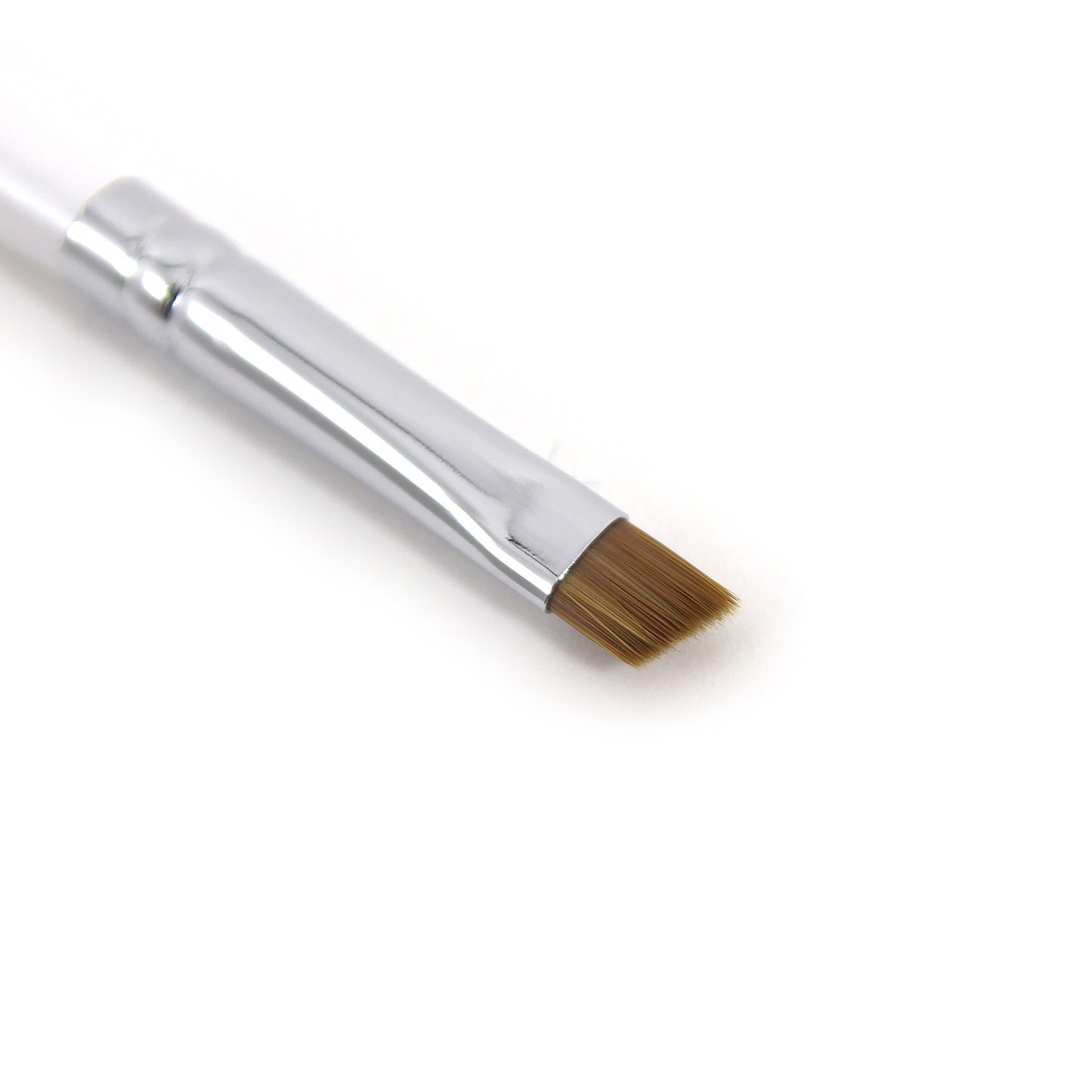
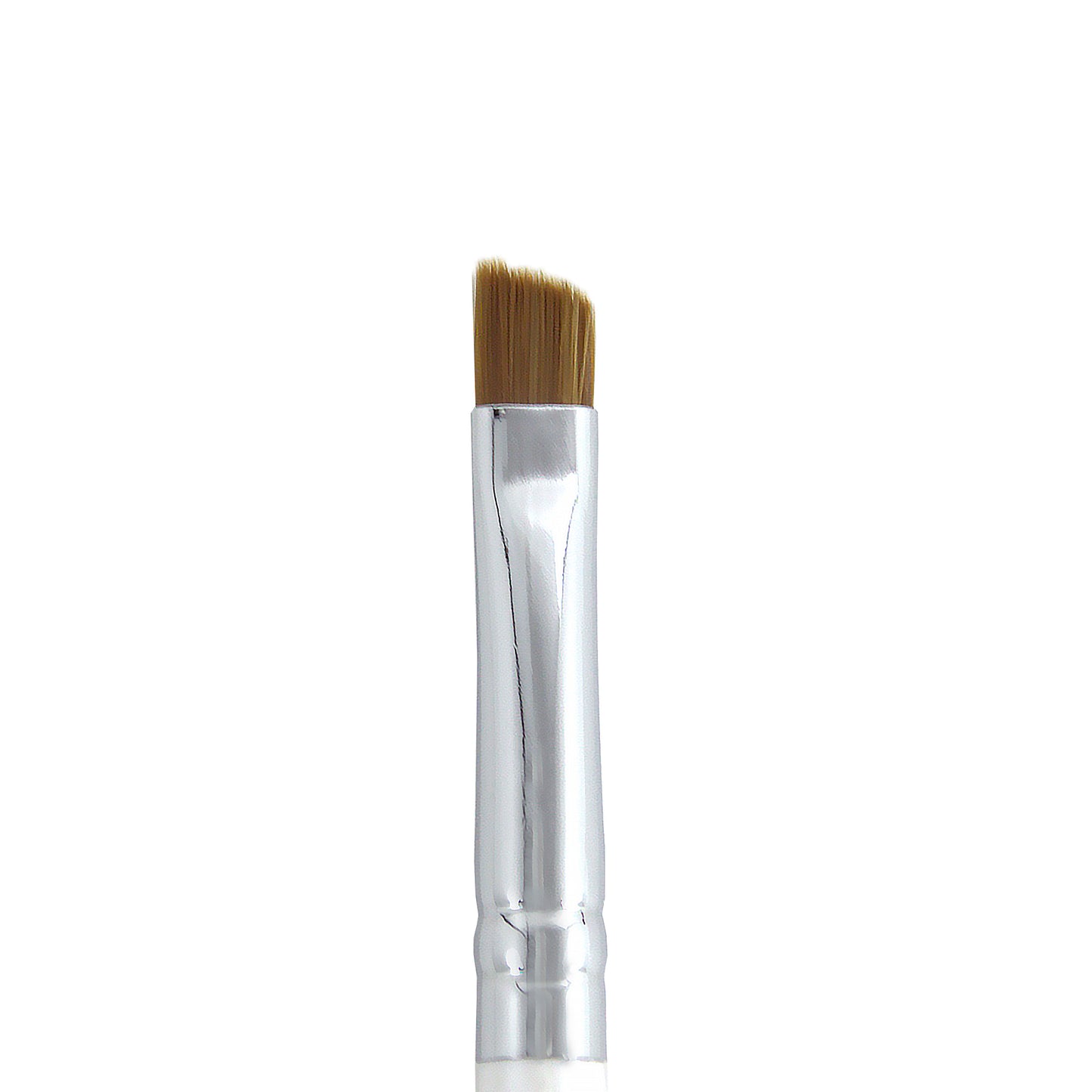
How sharp is the edge on a CTR angled brush?
Exceptionally sharp — achieved without cutting a single hair.
In mass-market production, an angled brush's geometry is created by diagonal scissor-cutting of the bundle. This results in blunt, fraying stumps that lose their edge after the first wash.
CTR's approach:
1. No-Cut assembly — Artisans lay hairs diagonally in precision molds hair by hair, so the finest natural tip of each fiber sits at the cutting edge. The result is a blade-thin edge — literally fractions of a millimeter wide.
2. Extreme micron selection — For angled brushes, CTR selects bristle with a minimum cross-section of 14.5–20 µm, enabling lines thinner than a human hair.
Bristle types by product:
• Siberian kolinsky/sable (W0655, T1, T2, LB05): For gel liner, powder strokes, and hair-stroke eyebrow work. Maximum snap and spring, holds line geometry precisely.
• High-tech nylon: For cream pomades, tints, lamination products. Non-porous — product stays on surface, not absorbed into bristle. Edge stays razor-sharp through the full application.
• Italian raccoon: For firm wax textures. Simultaneously deposits a clean line and softly diffuses its edge.
Bronze ferrule deep-crimp locks the diagonal geometry permanently.
Will CTR bristle fray after contact with aggressive brow dyes?
It depends on the bristle type — and CTR offers the right solution for every chemistry.
Why bristle frays: Alkaline/acid dye components dry out natural hair's cuticle, destroying elasticity; cheap polymers react with alcohol solvents and lose their shape memory.
CTR's chemical-resistant solutions:
1. High-tech nylon (Black Style / Dark Sharm) — Complete chemical immunity. Non-porous smooth structure absorbs zero dye, pigment, oxide, or solvent. Use daily with the most aggressive lamination, henna, or permanent brow dye formulas. Edge geometry stays razor-sharp.
2. Premium taklon — Exceptional durability and resistance. Withstands thousands of wash cycles with dye products while maintaining perfect bundle shape.
3. Italian raccoon — The best natural option for stiff wax textures. Its naturally thick, dense fibers resist chemical damage far better than delicate squirrel or kolinsky.
Care rule after dye use: Clean bristle immediately after every application. Never let dye dry inside the bundle. Dedicate brow brushes to dye products only to avoid cross-contamination.
Bronze ferrules and sealed wood handles prevent solvent penetration into the ferrule joint.
Does shiny bristle mean it's natural hair or synthetic taklon?
Shine is not a reliable indicator of natural vs. synthetic — both can shine, for completely different reasons.
Natural bristle that shines: The shine comes from high melanin content in the cortex (the hair's core) combined with a healthy, undamaged cuticle acting as a mirror. This is a premium quality marker. Examples of naturally shiny CTR bristle: black/grey squirrel (antracite mirror shine), sable and kolinsky (warm golden-brown luster), elite white goat (silky pearl sheen). If a natural brush looks dull and flat, it means the hair was processed with harsh bleaches or acid dyes that destroyed the melanin.
Taklon that shines: Taklon's perfectly smooth polymer surface reflects light uniformly. CTR uses the latest-generation ultra-fine taklon, which produces a delicate, premium-looking glow — not the cheap "plastic" shine of low-grade mass-market nylon.
How to tell them apart under magnification: Natural bristle has a scale structure on the surface (cuticle); taklon is mirror-smooth with no texture.
How soft is CTR bristle? (3-level classification)
CTR bristle softness is controlled by two fundamental factors: fiber thickness in microns (human hair ≈ 70–100 µm; CTR raw materials = 14.5–20.59 µm) and No-Cut hand-assembly (preserved natural tips — not machine-cut stumps).
Level 1 — Extreme (weightless) softness
Materials: black and grey squirrel, fox hair.
Feel: like touching silk or liquid velvet. Zero stiffness. Ideal for transparent dry shadow layers, sheer highlights, and hypersensitive or mature skin.
Level 2 — Silky softness with noble spring
Materials: burgundy squirrel, royal sable, elite white goat (14.5–20.59 µm), premium taklon (Black Style collection).
Feel: incredibly soft to the touch with enough snap for controlled color placement and blending. The sweet spot for most professional makeup work.
Level 3 — Springy (functional) softness
Materials: Italian raccoon, high-tech nylon (Dark Sharm collection).
Feel: doesn't scratch, but firm enough for cream textures, gel liners, and graphic precision work.
Does the paint peel off CTR brush handles after using cleansers?
No. CTR handle lacquer is specifically engineered to resist the daily chemical exposure of professional salon use.
Three-layer protection system:
1. Wood stabilization — Before any paint is applied, handles undergo deep drying and pressure-chamber treatment that removes every trace of residual moisture from wood pores. Unstabilized wood micro-expands and contracts under solvents, cracking lacquer from within. CTR's stabilized wood is geometrically static.
2. Triple adhesion primer — Three sequential layers of isolation primer are applied before any color, sealing wood pores completely and creating maximum bond between wood molecules and the decorative paint layer.
3. UV-polymerized lacquer (UV-coating) — The final protective layer is a specialized polymer compound cured under high-intensity UV lamps. UV polymerization creates a monolithic, chemically inert glaze that does not dissolve in ethanol, isopropyl alcohol, acetone, or surfactants.
The ferrule-to-handle joint — the most vulnerable point — is sealed with chemical-resistant adhesive inside a deep-crimped bronze ferrule, preventing any solvent from penetrating underneath.
Care tip: Dip bristle only (not the handle) into cleanser. Wipe the handle with a microfiber cloth after each client.
Can I create realistic hair-stroke eyebrows with a CTR brush?
Yes. CTR brow brushes are engineered precisely for this technique.
Realistic hair strokes demand a line finer than a single human hair, with a sharp base tapering to a precise tip. Three non-negotiable bristle criteria:
1. Minimum micron count — CTR brow brushes use bristle at 14.5–20.59 µm (human hair ≈ 70–100 µm).
2. No-Cut hand-assembly — natural tips preserved; no cut stumps that widen the stroke.
3. Absolute snap/springback — the brush must recover immediately after each stroke for repeatable precision.
Top bristle types for hair-stroke technique:
• Royal sable/Siberian kolinsky (W0655, T2, LB05) — For dry shadows and gel textures. Dense core + silk tip = maximum spring and definition.
• High-tech nylon — For pomades, tints, and brow dye. Non-porous; the edge stays monolithically sharp from first stroke to last.
• Italian raccoon — For firm wax textures.
All CTR brow brushes feature 30-year-aged ash or alder handles, bronze ferrule crimp, and pressure-chamber wood treatment.
You may also like


New
Innovative Super-Soft Makeup Sponge
Streak-Free Foundation Blending – Nano-Fibre Technology
€14,16
€12,00
-15%


BestsellerNew
Beveled Angled Eyebrow Brush
Beveled Angled Eyebrow Brush - Natural Hair-Stroke Definition
€10,62
€9,00
-15%


BestsellerNew
Blending Eyeshadow Brush W0707 | Grey Squirrel Hair
Blending Eyeshadow Brush W0707 - Grey Squirrel Hair Crease Expert
€46,02
€39,00
-15%


New
Eyeshadow Application Brush – Grey Squirrel Hair
Eyeshadow Application Brush - Grey Squirrel Hair Full Lid Coverage
€38,94
€33,00
-15%


New
Powder, Blush & Contour Brush – Petal Synthetic Taklon
Powder Blush and Contour Brush - Petal Synthetic Taklon Versatile
€35,40
€30,00
-15%